The naira is falling. The dollar is rising. And the fabric that cost ₦2,000 per yard six months ago now costs ₦3,500.
For apparel brands that depend on imported fabrics, this is an existential threat. Margins evaporate. Prices have to be raised. Customers complain. Repeat business declines.
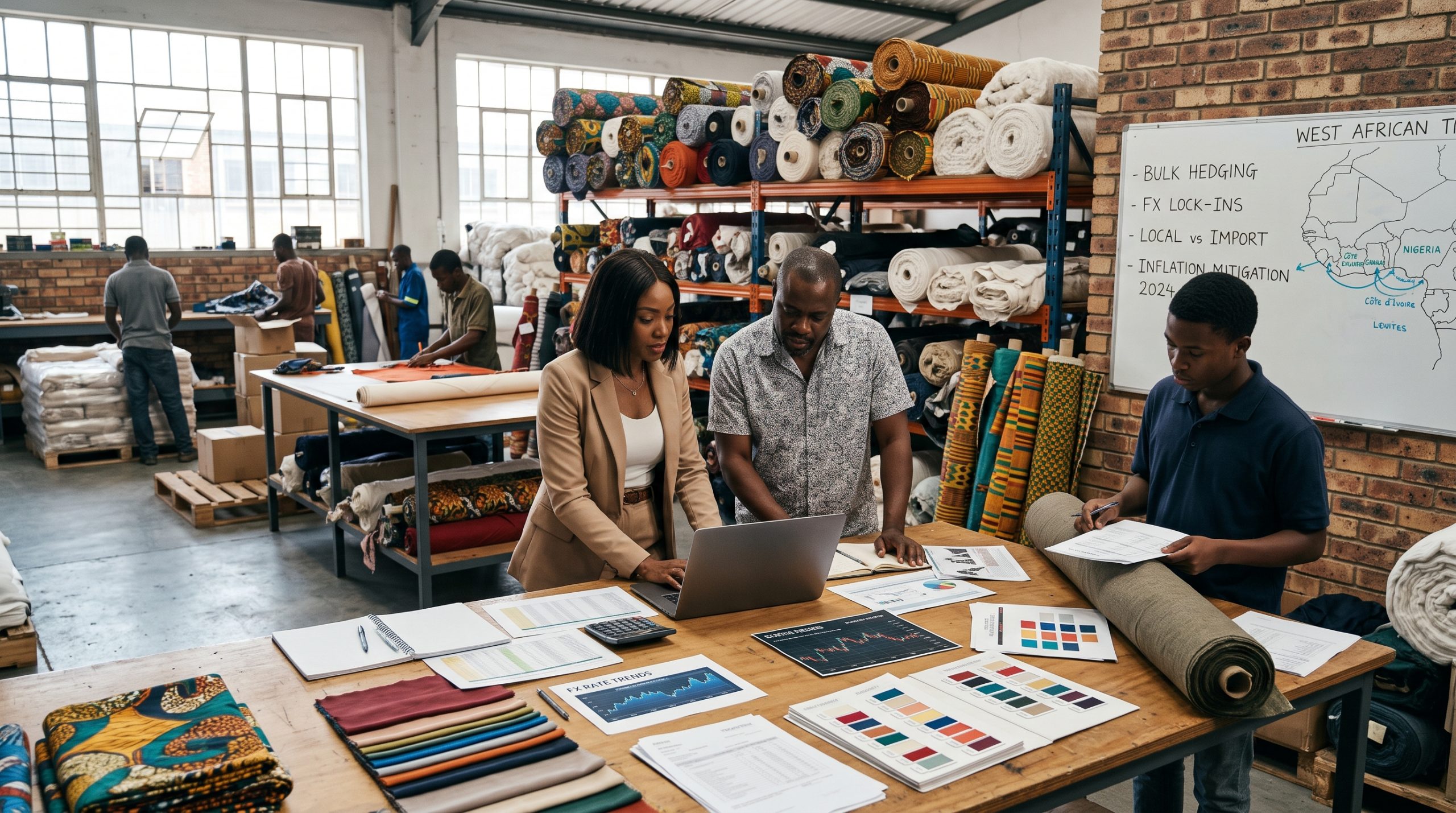
The brands that survive develop hedging strategies. Some buy fabric in bulk during favorable exchange rate windows, storing months of inventory. Others negotiate forward contracts with suppliers, locking in prices for future deliveries. Some shift to locally-sourced fabrics, accepting a quality trade-off in exchange for price stability.
The most sophisticated brands use a combination of approaches. They maintain relationships with multiple suppliers across different countries. They hold strategic reserves of critical materials. They design collections that can adapt to fabric availability—if one material becomes too expensive, they pivot to another.
None of these strategies eliminate risk entirely. But they reduce it to a manageable level. And in a market as volatile as West Africa’s, manageable risk is the best you can hope for. The brands that treat sourcing as a strategic function—not just a purchasing task—are the ones that survive currency shocks. They plan six months ahead, they build supplier relationships that go beyond transactional, and they never assume today’s prices will hold. That discipline is what separates the businesses that last from the ones that fold when the exchange rate moves.









No Comments