I recently ordered a dress from a Lagos-based designer. The dress cost ₦85,000. The delivery—from Yaba to Lekki, a distance of maybe 15 kilometers—cost ₦4,500. It took four days to arrive.
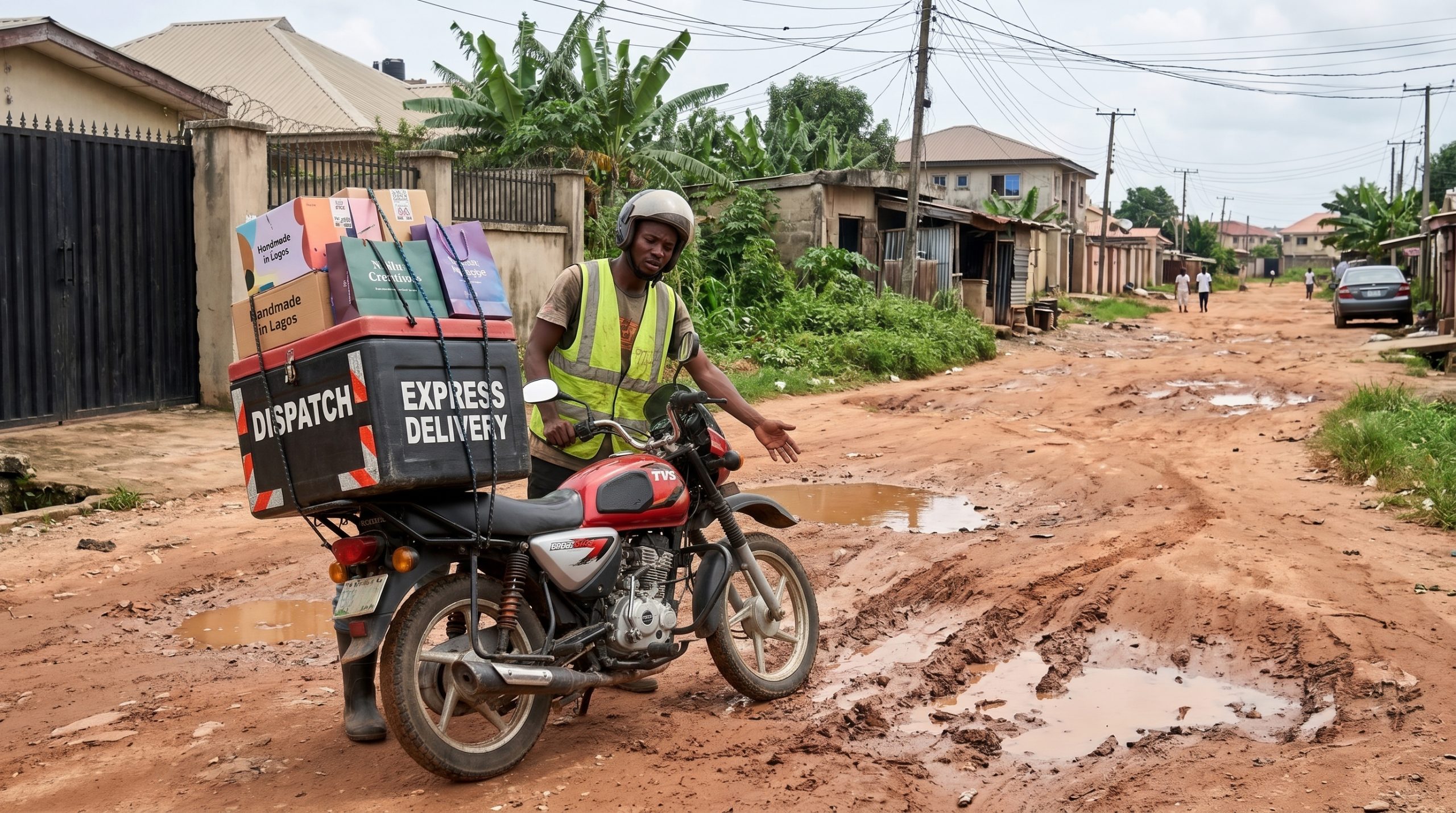
This is the reality of last-mile delivery in Lagos. It’s expensive, slow, and unpredictable. And it’s a massive tax on direct-to-consumer commerce.
The problems are well-documented: terrible roads, unpredictable traffic, lack of addressing systems, unreliable courier services. But what’s less discussed is the impact on creative businesses. When a designer has to spend ₦4,500 and four days to deliver a single order, their margins evaporate. Their customer satisfaction plummets. Their ability to scale is constrained.
Some brands have responded by offering delivery only in select areas. Others have partnered with bike couriers for faster service. Some have opened pickup locations where customers can collect orders in person. But these are workarounds, not solutions.
The real solution requires infrastructure investment that’s beyond the capacity of individual businesses. Better roads. More reliable courier networks. Address systems that actually work. These are systemic problems that require systemic solutions.
Until then, last-mile delivery will remain a tax on every creative business that sells directly to consumers. And that tax is one of the biggest barriers to growth in West Africa’s creative economy. Every naira spent on delivery is a naira not spent on production, marketing, or growth. The businesses that survive learn to factor this cost into their pricing from day one—and to communicate delivery timelines honestly, because disappointed customers don’t come back.






No Comments